|
|
 . . . .
World's Largest Selection of Wicks!
Wicks for virtually every heater, stove and lamp made since 1850
KOSMOS-BRENNER LAMPS &
WICKS
Kosmos Lamp Kit -
Kosmos-Brenner lamps -
Sebastianbrenner -
Lempereur & Bernard
- Den Haan - Kosmos
Concierge - B&H
"Imperial" - Wild & Wessel
- Veritas table
lamp
"Sans Rival"
borosilicate chimney for 14''' Kosmos lamps
New, Superb chimney!
Kosmos Wicks ~~~ Kosmos Chimneys
Sizes of Kosmos Lamps
Aimé Argand of Switzerland invented and patented
the Argand lamp in 1780. This lamp burned whale oil, but used a
circular wick with a separate reservoir. The invention of kerosene
in the early 1850's lead to the inexpensive flat wick kerosene lamps,
essentially ending the life of the Argand lamp. The concepts
developed by Argand, however, would resurface with the folded wick
Kosmos style burner in 1865 and the separate fuel reservoir being
employed for "student lamps" by Manhattan Brass Co. and Kleemann of
Germany.
|
Wild & Wessel of Berlin in 1865 developed the "Kosmos"
burner, where a flat-wick formed is round. To obtain clean burning,
a side draft was used to induce combustion air to the center of the
circle of wick.
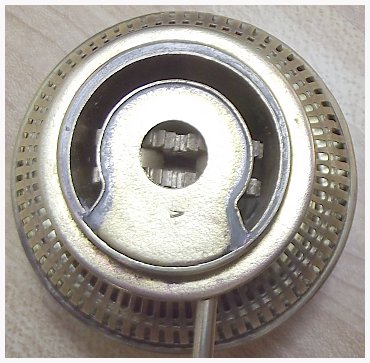
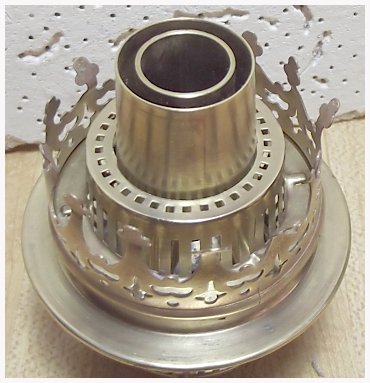
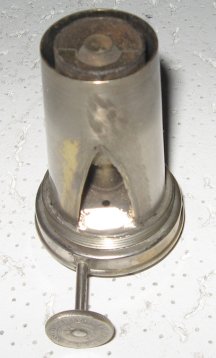
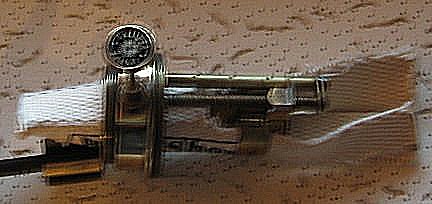
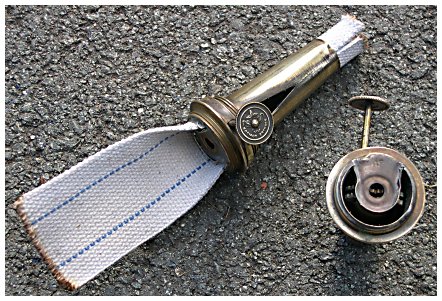
["Goes
in flat, comes out round"... by a process of 'conical curling' ...
shows the triangular air port allowing air to centre of flame. Also
shows direct gear drive to the wick.] Photo by Alex Marrack |
 |
Wild & Wessel of Berlin in 1865 developed the "Kosmos" burner,
where a flat-wick formed is round. To obtain clean burning, a side draft was used to
induce combustion air to the center of the circle of wick. The
side draft burner obviated the need
for a central air shaft through the fuel reservoir, and were easier to
manufacture than center draft lamps. To direct the
air flow properly past the flame, these burners used a pinched, reduced
diameter chimney. Emil Wild was granted
US patent #303774 on Aug. 19, 1884
for a Kosmos burner with a flame spreader. This burner was in my
opinion the epitome of brilliant design. Sold in the US as the B.B.S.
"Imperial" burner. The
Central
Vulcan was sold by Catterson's in England. these lamps were absolutely outstanding burning lamps,
easily putting out as much light as a larger center draft lamp.
W& W continued to make W&W Kosmos burners until THE
WHOLE W&W COMPANY was taken over by Hugo Schneider & Co in 1903, and
Schneiders continued to make EXACTLY the same W&W range, with the same
W&W markings, so you cannot date them. (from Alex Marrack)
Brokelmann, Jager & Co. from Neheim A/D Ruhr, Germany
may have started making Kosmos burners (Brenner means Burner in
German) in 1899.. or before, loads of makers made Kosmos brenners /
burners by then. (from Alex Marrack).
About 1895, Ehrich & Graetz of Berlin introduced the
"Matador" burner, in which a
flame spreader was
used. Depending upon the width of the disk, chimneys were either
straight or had a pronounced bulge. The "Sebastianbrenner" burner used a medium sized disk on a mesh tube with a straight chimney,
for example. (ALL matadors have a very pronounced bulge and big
spreaders (see my article); other burners have smaller
spreaders and some have straight or Kosmos shaped chimneys. (Alex
Marrack)
[W&W used three names: Kosmos, Kosmos Vulkan and
Central Vulkan. It is ABSOLUTE that a Kosmos burner has no
spreader and has a pinched chimney and direct gear-drive to the wick
type winder that is what defines a Kosmos (Alex Marrack); the Kosmos Vulkan had a
Flame Spreader but not a wick carrier, and the Central Vulcan had
both a flame spreader and a wick carrier, were made in both side-draft
and central draft versions, and used a Vulcan style chimney. In the
UK the center draft version was sold (exclusively?) by Catterson and so
called the
GLOBE Vulkan (Globe being Catterson's trademark). To
complicate matters, Den Haan in Rotterdam reportedly purchased the
machinery from Brokelmann and produced all versions of the Wild & Wessel burner. [So my B&H Imperial, with a flame spreader but
lacking a wick carrier,
is a Kosmos Vulcan burner.
Den Haan in Rotterdam (Netherlands) and Gaudard in
France (Kosmos) still produce Kosmos and Kosmos-Brenner lamps. The Kosmos #14
burner without a flame spreader and the Kosmos #15 burner
is a Matador with flame spreader, both without wick carriers, but they
have never made Vulkans or 'W&W marked Kosmos burners' (Alex
Marrack).
In addition to their fabulous 20''' and
30''' center draft lamps, L&B "Belge" also produced Kosmos-Brenner lamps with flame spreader but lacking a wick
carrier, in Kosmos Vulcan style, in various styles. My L&B Kosmos Vulcan is a 15''' pedestal lamp.
Wicks for Kosmos-Brenner lamps were measured by the
flat width by the designation of "lines," symbolized by ''' for
"line." Light output being (in part, ( a 10 line
spreader type burner, eg wizard, gives loads more light than a 14 line
kosmos [A.M.] ) a function of the top surface area of a
wick, the wider the wick the greater the light output. Kosmos
sizes are listed below for 6''' to 14'''. Above 14 line,
individual makers and countries had different ''' standards. (No
countries had 'standards', and different makers diverged more in the
larger sizes than they did in the smaller ones, there were just rather
general 'habits' that were followed more or less by most makers.
Standards means something fixed and governed by, for instance SAE, or
BSI.) [A.M.]
Sizes of Kosmos Lamps
Determining which size wick fits a lamp when there isn't a stub of wick
left to measure becomes difficult. I have listed below the inside
diameter of the top of the outside wick tube for various Kosmos lamps I
own, shown below the line number and width in inches. Please note
there were hundreds of manufacturers, so dimensions may well vary, in
some cases vary considerably.
|
Kosmos Lamps, Rough measurements |
| Ligne size |
Outer wick tube diameter |
Wick width |
Chimney base diameter |
| 6'' |
0.575" |
1 3/8" |
1 5/16" |
| 8''' |
0.620'' |
1 5/8" |
1 7/16" |
| 10''' |
0.668" |
1 7/8" |
1 1/2" |
| 12''' |
0.724" |
2 1/8" |
1 7/8" |
| 14''' |
0.900" |
2 9/16" |
2.0" to 2 1/16" |
| 16''' |
0.916" |
2 3/4" some |
2.0" to 2 1/4" |
| 18''' |
1.226" |
2 3/4" some |
2 7/16" |
| 20''' |
1.387'' |
3 5/8" |
2 7/16" |
| 24" |
Varies |
4" |
varies |
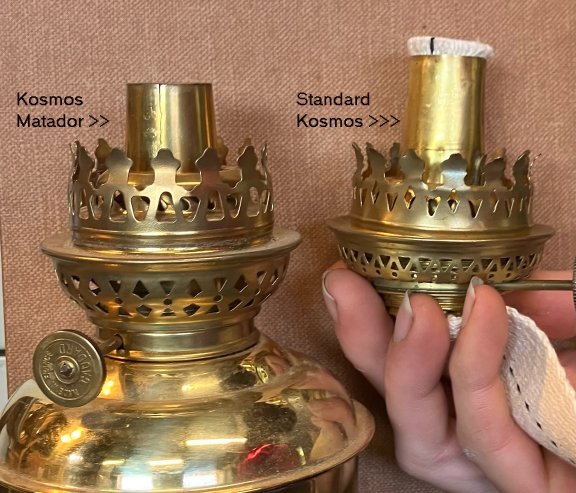
KOSMOS BRENNER VS KOSMOS MATADOR
|
 |
|
Matador draft tubes are shorter than the
draft tubes for standard Kosmos Brenner lamps; the flame
spreader on a Matador burner is approximately the same height
as the drat tubes on a standard Kosmos burner. |
|
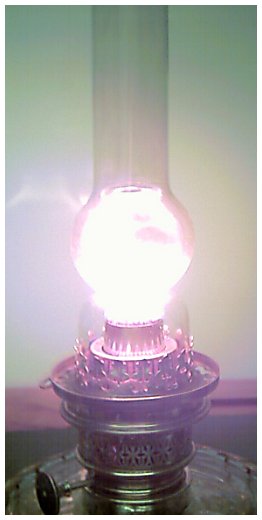 |
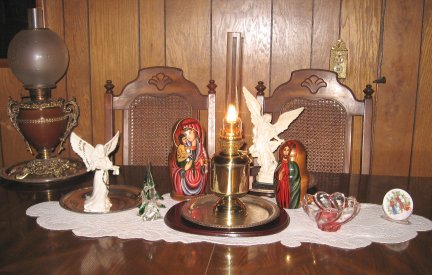
<<< Central Vulcan lighted. >>>>>>
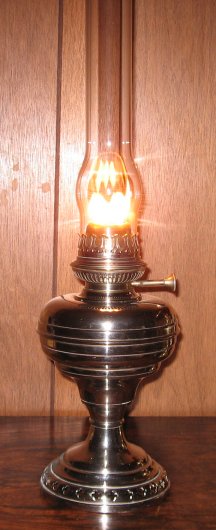
Typical application of smaller Kosmos burner with the
definitive chimney. |
 |
PHOTOS OF VINTAGE
KOSMOS and KOSMOS-BRENNER LAMPS
One of the great advantages of Kosmos lamps is the lack of a
center draft tube. That meant that fonts could be any style
or size and constructed of glass, pottery, brass, whatever suited
the lamp maker.
|
 |
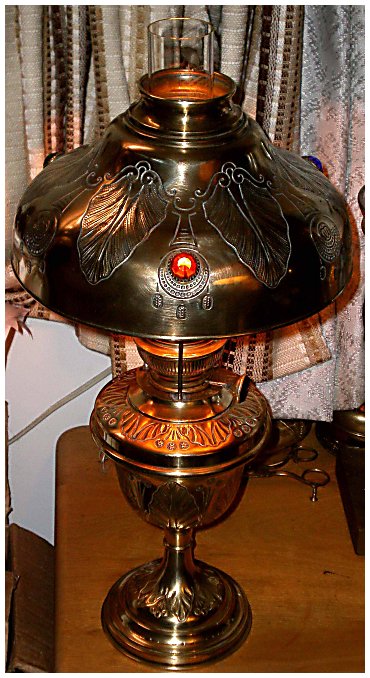 |
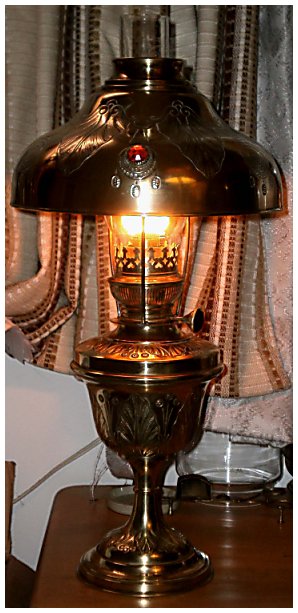
Lampe Parisianne
This is an L&B 15''' Matador. The design
with the metal reflector and often ornately embossed Kosmos or
Matador fitted base are so very typical early 20th century
French lamps. They are often fitted with elaborate glass bead
fringes.
Owned and photographed by Peter Brickell. |
Variations possible with Kosmos burners
|
At right, a "French Garden Lamp" made by Wild
& Wessel circa 1900. The burner is an 8'''. This lamp was
designed to permit burning outdoors in a draft (Punkah top) and light up a
fancy French garden. The short chimney inhibits really
clean burning, but that is not a problem outdoors when burning
as intended.
This particular lamp was purchased on eBay.fr
and arrived straight from a French garden, spider webs and
dirt intact.
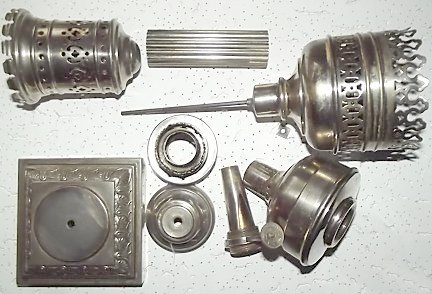
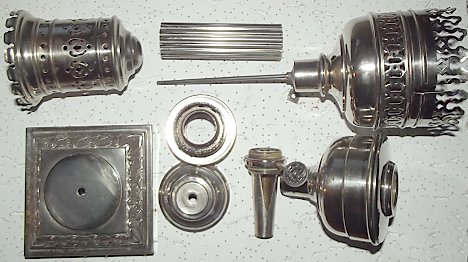
Lamp restored;
parts
as received,
parts
after citric acid bath,
parts
after polishing.
Click the photo to enlarge the lamp. |
 |
Small lamps
|
 |
<<<
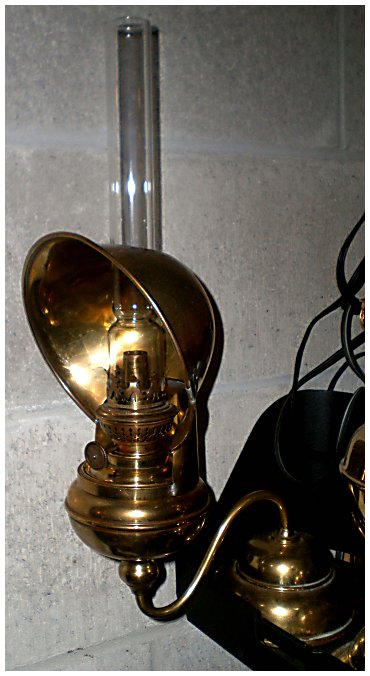
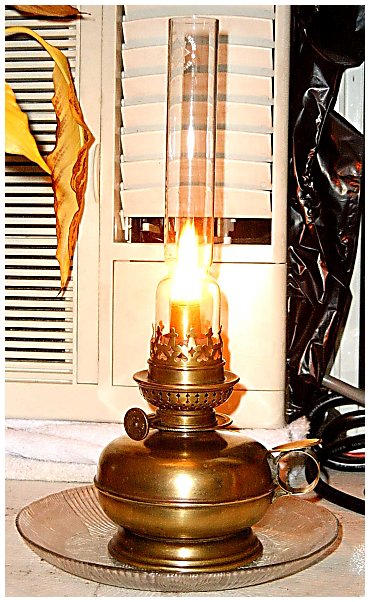
Piano and reading lamp.
>>>
Wild & Wessel hand lamp.
Owned and photographed by Peter Brickell. |
 |
`
|
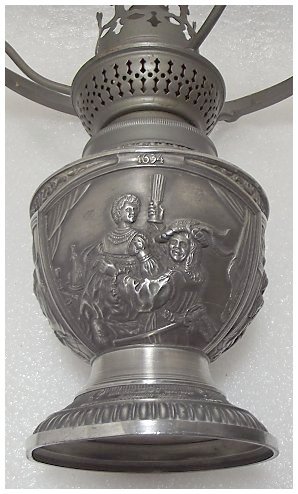
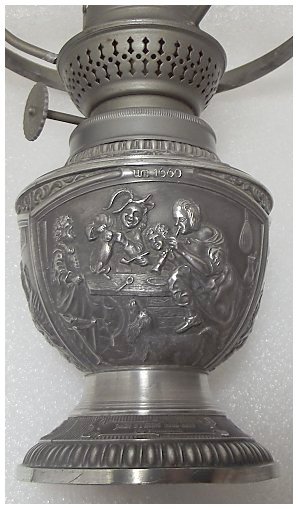
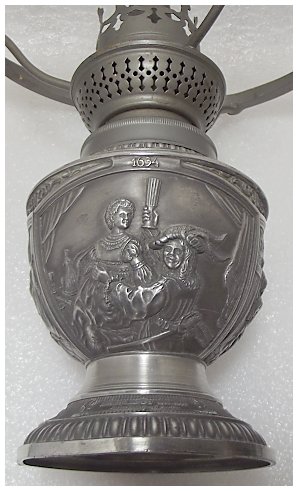
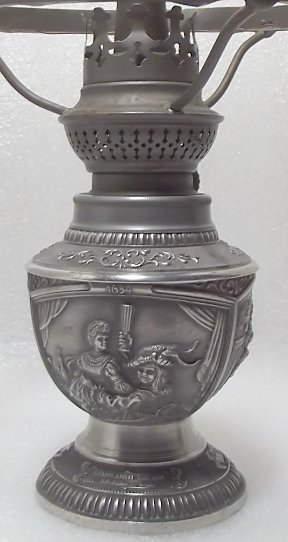
Kosmos burners allowed designers to be
very creative due to the lack of a draft tube. German lamp makers often used
pewter fonts with 3 or 4 faces or scenes to create beautiful, unique lamps,
as shown above. Click the photos to enlarge them. |
`
|
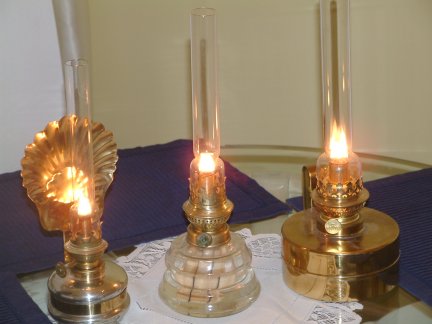 |
A nice assortment of Kosmos-Brenner lamps. At
left, a 6''' with the correct chimney burning with a 10'''
and 14''' lamp together. Nice group photo!
Lamps owned and photographed by Alex Muzyka.
Click on photos to enlarge them. |
|
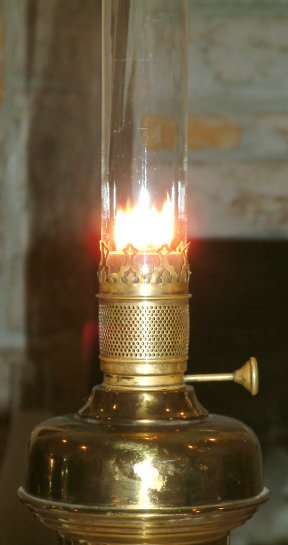 |
This is a "Sebastianbrenner" burner made by Schwintzer & Gräff in Berlin on a L&B fount. This burner belongs
to a family of burners called the "Weisslichtbrenner" or "white
flame burner". They use a straight glass chimney. 20'''
burner, 90mm flat wick.
Lamp owned and photographed by Alex Muzyka. |
|
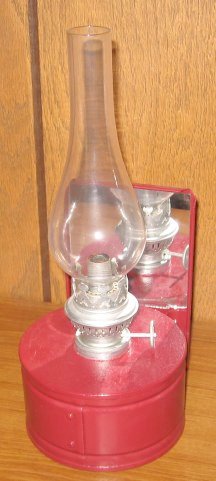 |
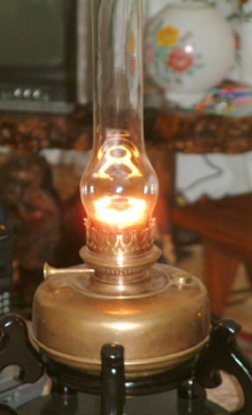
Metal font lamp with #6 Kosmos burner. The
burner is aluminum and was made in Japan. The chimney is not
correct. A 6''' Kosmos burner is very economical of fuel.
#6 Kosmos-Brenner burner |
|
Lempereur_&_Bernard |
|
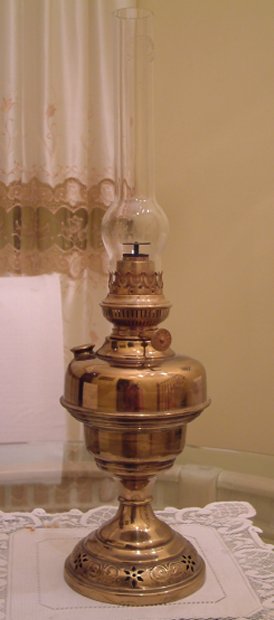 |
 |
 |
|
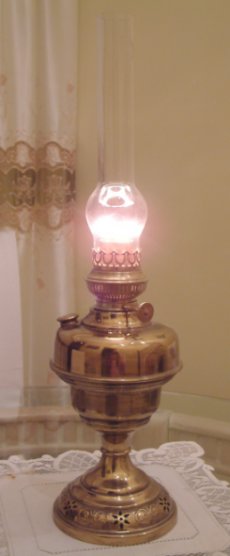
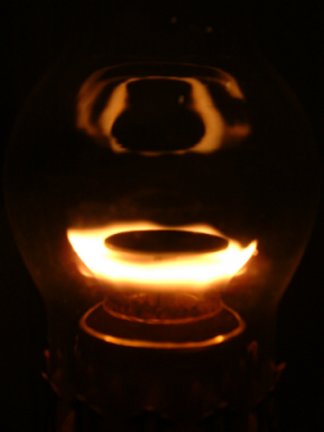
An interesting side draft
14''' Matador lamp made by Lempereur & Bernard (L&B). It uses
a standard 14''' 2 1/2" flat wick. This lamp is most
interesting as it has a weird flat flame spreader (for a Kosmos-Brenner burner) and is a weird size for a Matador
burner. Left, above; lamp unlighted. Center, lamp
lighted. Right, the unusual flame from the flat flame
spreader.
Lamp owned and photographed by Alex Muzyka. |
`
|
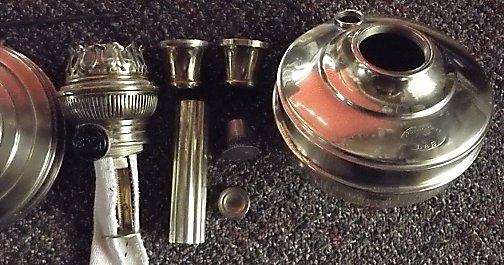
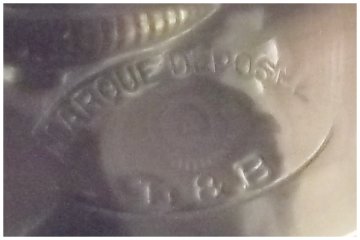
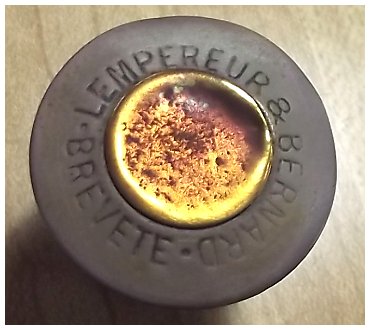
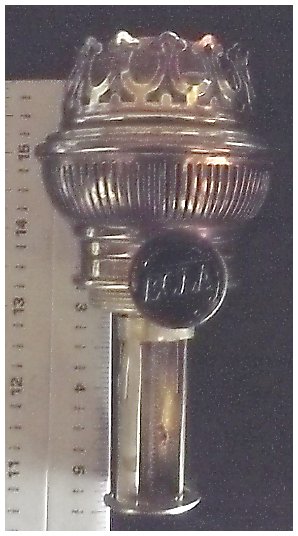
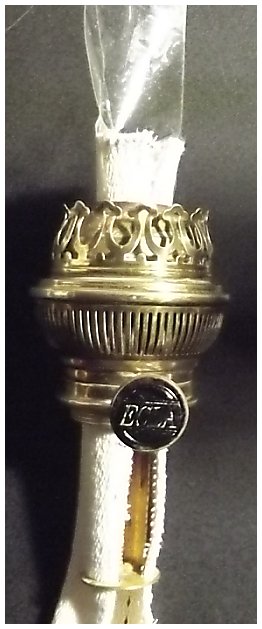
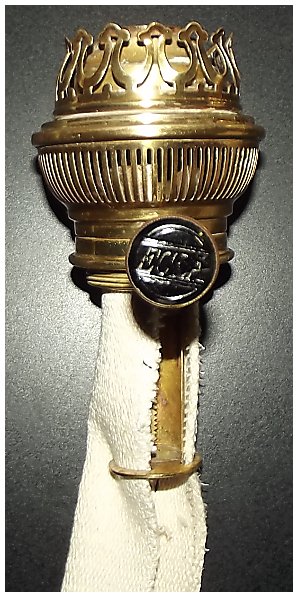
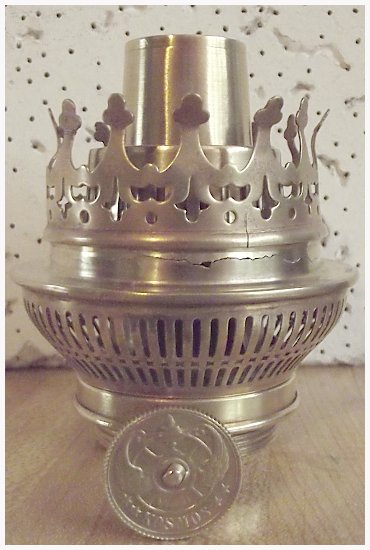
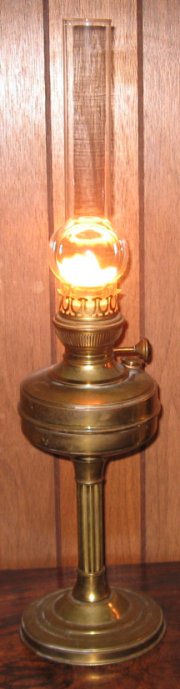
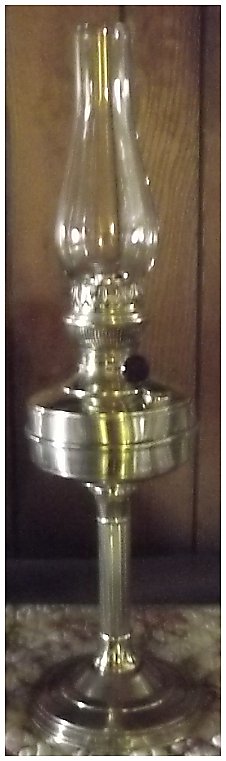
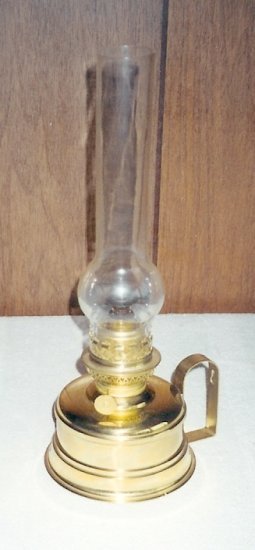
Lempereur & Bernard Brevete, 15'''.
Wick 2 3/4" wide, 0.82" thick. Chimney 2 1/8". Wick
knob marked: "ECLA". This is a rare L&B pedestal lamp
with a side-draft burner. The flame spreader is flat with a
medium width (1 3/32") Liverpool button.
In contrast to most Kosmos style lamps, this lamp has a fill cap
on the fount. "Brevete" means 'Patent." "ECLA" means "Design
Patent." Near right, unpolished. Far right,
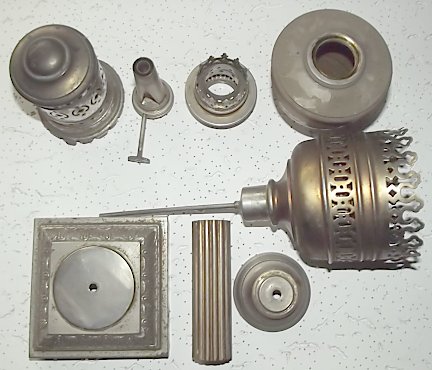
after soaking in citric acid and polished. Below, left to right:
disassembled and polished after citric acid bath, L&B embossed
name, flame spreader. Second row below, left to right, wick
carrier, wick installed by adding a tape extension and pulling
through from the bottom, and wick installed.
|
 |
 |
`
|
 |
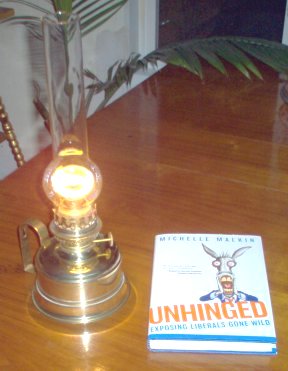 |
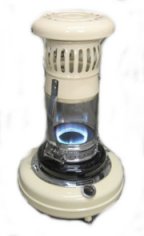
Kosmos Concierge lamp with #15 burner unit.
Any quality center draft lamp with a metal
fount will burn brighter with less
fumes and wick charring when burning mineral spirits. On the
left is a photo taken without a flash of a Kosmos Concierge
easily producing enough light by which to read. The
Concierge lamp is very handy to carry and store on a wall when
not in use.
2 9/16"
- "14 line" wicks
Kosmos Concierge lamps available from
St. Paul Mercantile. |
|
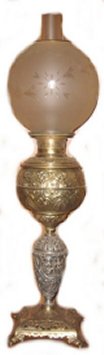
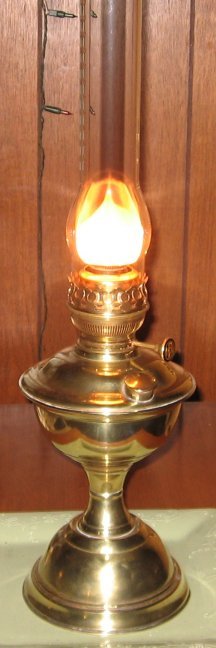
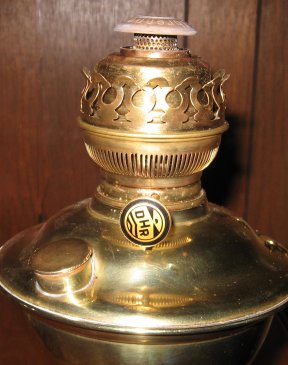
At right is a large
Veritas table lamp.
It began life with a British Duplex burner. With the
help of Alex Muzyka it now wears a large Ideal-Brenner 20''' burner with
mushroom flame spreader (far right) made by Den Haan,
Rotterdam (DHR). At right it is
burning with my
3 5/8" flat wick and my Success
chimney. Notice the beautiful full tulip flame! Click on
the photos to enlarge them. |
 |
 |
Small Kosmos Table Lamp
|
 |
 |
 |
|
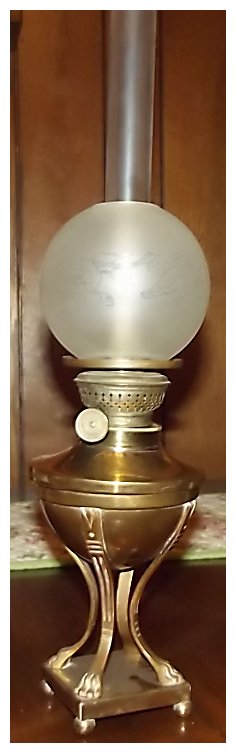
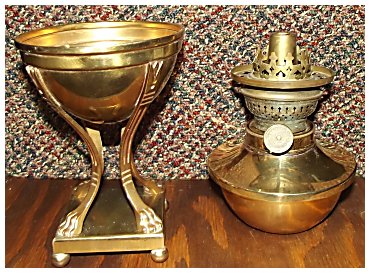
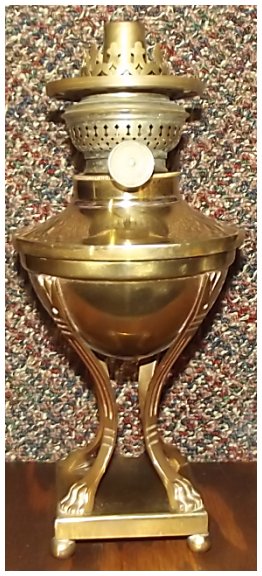
Above, a 6''' Kosmos Rundbrenner.
Note the very unusual construction with a font in a cup on the
base. A 6''' Kosmos burner is extremely fuel efficient
and was used for area lighting, just bright enough so people
would not bump into tables and furniture at night. |
|
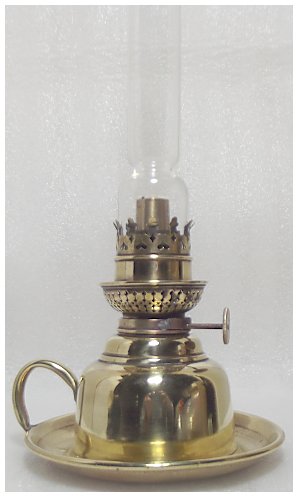
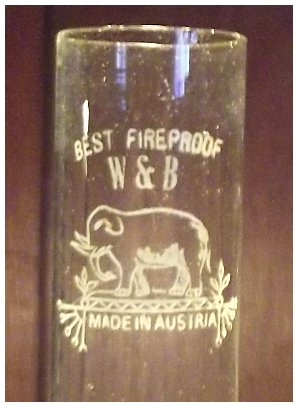
My latest Wild & Wessel is a small 10''' hand
lamp. It required some repairs as it has obviously been well
used in the past 120 years, but the resulting lamp is beautiful and
burns perfectly. The rare W&B Austrian chimney came with the
lamp. |
 |
 |
Wild & Wessel 14''' KOSMOS Considerably
larger than typical 14''' lamps
|
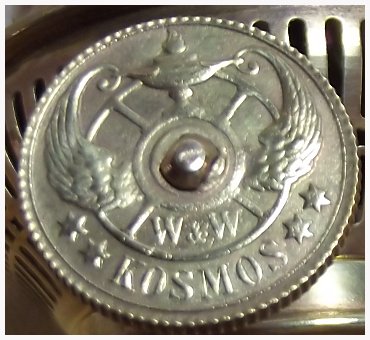
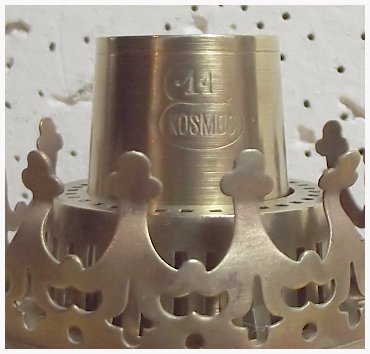
The photographs in this section
clearly show a marked 14''' W&W Kosmos burner. The outer wick
tube is 0.951" in diameter and the wick required is 2.80'' wide -
wider than many newer 18''' Kosmos burners! |
 |
 |
Wild & Wessel lamp information
As mentioned above,
Wild & Wessel of Berlin in 1865 developed the "Kosmos"
burner. Emil Wild was an undoubted genius at lamp designs.
His August 19, 1884 design for a burner with a flame spreader was sold
in the US as an "Imperial" brand and in the UK under the "Vulcan" brand
name. The unique chimney for that burner was also
patented by Emil
Wild. Unfortunately, Emil Wild was apparently not an astute
businessman. From what I can determine, Wild had an exclusive
import arrangement with Bradley & Hubbard in the US and Catterson's in
the UK, yet failed to put a performance clause in either contract.
B &H was far more concerned with marketing their new line of center
draft lamps than trying to market the more expensive, exquisite Imperial
burner. And Catterson's in the UK was more interested in selling
lamps in their London department store than actually working as a
wholesale agent for the Vulcan line of lamps - to the point their Vulcan
lamps actually had their own badge on the burner! (There
are supposedly Vulcan lamps found in the UK without the Catterson's
badge, so they apparently did some wholesale business.) Thus Imperial
and Vulcan lamps are quite rare, which is a real shame because they were
one of the cleanest burning lamp designs ever produced.
|
Some history of Catterson's as generously supplied by
Rob Gregor in Australia
SP Catterson & Sons (Summarised version):-
Address was the Globe Lamp works, 87 to 89 Newington Causeway, Worthing,
London SE1.
The Firm traded as "Lamp Manufacturers and Importers/Exporters" and
their primary product line was Paraffin/Petroleum Lamps and Stoves. From
the mid 1880's they exclusively sold limited quantities of the Wild &
Wessel Lamps to one of the large London Department Stores and apparently
had a small wholesale business in lamps as well.
They also had a smaller operation in Liverpool and that branch was
called "The American Light Co" and it sold "Electrical Apparatus and
Appliances".
In the 1930's, large sections of the UK economy were suffering
contraction as a result of the "Great Depression" and Catterson's
relatively narrow market segment had also contracted. Thus not only were
they operating in a difficult economic environment but at that time they
also became subject to serious and ongoing fraud by their head Cashier.
The fraud continued for at least 3 years due to inadequate internal
controls and after it was finally detected and the culprit duly
punished, it also resulted in a Court Case between Catterson's and their
regular Auditors, in which they claimed the Auditors had been negligent
by not detecting the fraud earlier.
It was noted by the Court that their Auditors had earlier advised
Catterson's Directors on their business lacking adequate financial
controls and they had also recommended a number of changes be made, but
those were not put in place.
The following sequence of events is generally considered to have been
the major factors in the business failure and they entered liquidation
in 1937.
Contributing Factors
Catterson's, like many firms of their time, had underestimated the
impact and the duration of the Western Worlds recession and they were
also reluctant or unable to undertake rapid and significant
restructuring. The financial cost from the long period of fraud was also
significant and they then faced substantial costs from an unsuccessful
Court Battle.
Court Decision (in summary):
SP Catterson & Sons [1937] 81 Acct LR 62
http://b.quizlet.com/a/i/spacer.Thhr.gifCourt stated:
Held in Auditors' favour
It was not part of their duties to tell directors how to run the
business and they had no power to insist that their recommended changes
were put into operation
(NOTE:
The above article contains items which may be of interest
to those who collect Wild & Wessel and Globe Vulkan Lamps but it is not
meant as a complete history of SP Catterson & Sons PL. Should anyone
have more complete detail, this will be welcomed.)
|
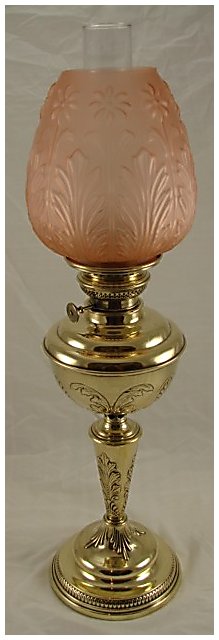
Above, Rob Gregor's fabulous 18'''
Arts & Crafts style W&W lamp.
Photo by Rob Gregor. |
|
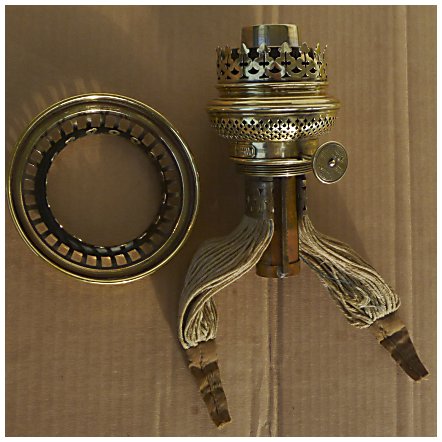
Original wick in the burner.
Photo by Rob Gregor. |
PRINCIPLE KOSMOS CHIMNEY LAMP BASE
DIAMETERS (Other chimneys here)
|
1 5/16" |
6 '’‘ Kosmos |
|
1 7/16" |
8 ‘’‘ Kosmos |
|
1 1/2" |
10 ‘’‘ Kosmos |
|
1 7/8" |
12 ''' Kosmos |
|
2" |
14 ‘’‘ Kosmos (British?) |
|
2 1/16" |
14 ''' Kosmos (American?) |
|
2 1/8" - 2 1/4" |
16 ''' Kosmos
|
|
2 7/16" |
18 ''' Kosmos |
Back to top of page
|
Lamp Collector’s Resource
Library: Old Lamp Catalogs on 3 CD's in
SEARCHABLE Adobe - NEW!!!
Click Here
Lamp Wicks BY THE ROLL! - SAVE $$$
Lamp Wicks:
Center Draft Wicks
- many
available only from this Wick Shop.
#0C,
#0S,
#0L,
#1B,
#1M,
#1R,
#2M,
#2L,
#2R,
#2 P&A,
#2B,
#3L.
Standard lamp wicks
and
Aladdin Lamp Wicks,
chimneys etc
Kosmos Lamp Wicks
Smudge Pot - Tiki Torch Wicks
- Toledo Torch & Some Dietz
Kindler Wicking
Auto Motor Primer Wicks
HI SEAS 100C MARINE
DIESEL HEATER WICK
Lamp Chimneys:
Center Draft Lamp
chimneys in borosilicate glass
from Junior "Tiny" to Mammoth lamps.
#0M,
Rayo
Jr.,
2
1/2",
2 5/8",
2
15/16",
3 1/8",
4",
4
1/2"
Standard glass lamp chimneys
& Kosmos chimneys
Globe Vulcan (Central Vulcan) Chimneys -
16''',
18''',
24''' &
30'''
CHIMNEYS AND WICKS
Fabulous "Sans Rival"
borosilicate chimney for 14''' Kosmos lamps
Student Lamp Sans Rival Chimney with
1 7/8" fitter!!!
Angle
Lamp chimneys
Sonnenbrenner Lamp Chimneys
Lamp Chimneys
- Dimension of
nominal base diameter by make, model and "line".
Information on lamps:
Aladdin Lamp History
Aladdin Lamp Wicks & Chimneys,
Aladdin - Exploded burner views
Beginning Lamp
Restoration
Lamp Repair & projects
Center Draft Kerosene Lamps
(Photos, information and history, etc)
Center Draft
Lamp manufacturers and brand names
Kosmos-Brenner
lamps
Miller Lamps - a photo album
Photos of
restored center draft lamps
Victorian Era
Student Lamps
USE, CARE and WICKING of CENTER DRAFT LAMPS
Early American Metal Font & Specialty Lamps
Flame Spreaders and
"Smoke
Consumers"
from Alex
Marrack
- Vulcan, Imperial, Veritas,
Belgian, Hinks, Messenger's, Young's Court, etc.
Articles by Alex Marrack:
Registered Design Numbers For British Lamps
GERMAN PATENT LETTER CLUES - DRPs AND DRGMs, 1877 to 1945
Home Page
Site Index
Site Index for all things Perfection
Links to web sites for parts,
information and restoration.
Back to top of page
|