|
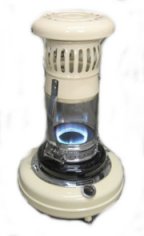
WICKS TO FIT THE HEATERS LISTED
BELOW - AND MORE!
Unique Specialty wicks
for
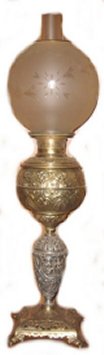
19th Century lamps
|
 . . . .
World's Largest Selection of Wicks!
Wicks for virtually every heater, stove and lamp made since 1850
Kerosene Heater
Safety
Kerosene heaters produce very little carbon monoxide!
Simply having a window barely open is sufficient to replace any oxygen
consumed in the combustion process and vent the few fumes produced.
Unvented kerosene space heaters have full UL approval to burn in a
house, period. They would not have UL approval if they killed people.
There has never been a house fire, injury or death caused by a faulty
kerosene heater - and they have been in use for over a century. Last
year there were two (2) house fires in the entire US caused by people
knocking over their kerosene heaters on which the safety tip-over switch
had been disabled (and one so far in 2008), which obviously cannot be
blamed on the heater itself. I'm willing to bet there were two (2)
houses burned down in the US last year per county because idiots put hot
wood stove ashes in cardboard boxes out onto a wooden porch or deck!
Which is unsafe?
Every day there are house fires (and resultant deaths) caused by
electric space heaters and other "safe" electrical devices, compared
with none by kerosene heaters in over 100 years. Yet woefully ignorant
"preparedness" experts tell people that kerosene heaters are dangerous
and other space heaters are wonderful. Those "experts" must be secretly
into population control.
Another example. Because the ancient buildings
involved make renovation almost impossible, many people in Holland and
on the island of Malta use kerosene heaters. Thirty miles across the
English Channel, the UK "British Standards" (appropriately "BS") all but
outlaw kerosene heaters as being unsafe!!! The State of New York agrees
with England - kerosene space heaters are outlawed. Connecticut and
Pennsylvania have contiguous borders with NY, and half the people it
seems in CT and PA heat with kerosene heaters, so many that corner
service stations have a pump dispensing 1-K clear kerosene for their
convenience. The commonality between NY State and England? Why are
kerosene heaters suddenly dangerous when they cross the state boundary
into New York? The natural gas industry has much more political muscle
than kerosene heater stores, so they reportedly got the competition
outlawed!!! How many people in New York freeze to death during winter
storms when the power goes out and they have been denied kerosene
heaters? It would appear the state legislators in New York are more
dangerous than kerosene heaters.
When using a kerosene heater, always keep a window cracked open a little
for ventilation. Is that for removal of dangerous fumes? NO!!! It is for
oxygen replacement. Anything burning consumes oxygen. That includes wood
stoves and natural gas appliances! An airtight home should have a window
opened a bit if a wood stove is being used, and in fact many states have
laws mandating a source of outside combustion air for modular home wood
stoves because they are sealed so tightly. In fact, in a well-sealed
home a window should be opened a half inch when using a clothes dryer,
even an electric model, as it expels oxygen from a home! The resulting
negative air pressure makes opening a door to the outside difficult, and
when the door is opened, air - and dust, debris and leaves - are sucked
into the house.
This comment about ventilation is issued in perhaps an overabundance of
caution, but nevertheless had to be mentioned because it is impossible
to know every place a heater could be located. Older structures were
always drafty and have more than enough ventilation - in fact often
enough "ventilation" to require giving some thought to sealing and
insulating them to conserve heat!
TIP OVER SWITCHES AND SAFETY
From the first Perfection heater in the early 1900's, all the way
through the Aladdin Blue Flame heaters and indeed every heater made up
until the 1970's, no tip-over switches were used. And there were no
house fires caused by faulty heaters. Beginning in about 1978, the
insurance companies for private stores required UL Approval as a
condition of issuing business insurance, and that mandated the tip-over
switch. It was not driven by a safety issue.
Safety
tips:
-
Keep candles at
least 12 inches from anything that can
burn.
-
Use sturdy, safe
candleholders.
-
Never leave a
burning candle unattended.
-
Extinguish
candles when you leave a room.
-
Be careful not
to splatter wax when extinguishing a
candle.
-
Avoid using
candles in bedrooms and sleeping areas.
-
Always use a
flashlight, not a candle, for emergency
lighting.
-
Consider using
battery-operated flameless candles.
-
All fuel should be treated as if it were very volatile.
-
Store fuel in an isolated area that is downhill and down wind
from other buildings.
-
Liquefied petroleum (LP) gas tanks should be left out in the
open (no enclosure).
-
Liquid fuel tanks should be stored in a well-ventilated
building.
-
A fire extinguisher should always be near the stored fuel area.
-
Electrical fixtures should be sealed from the fuel vapors.
-
Always shut down the machine before fueling it.
-
Clean up any fuel spills.
-
Only use the approved fuel types for your appliances and storage
containers.
-
If you are going to store gasoline, it needs to be treated with
a butylated hydroxytoluene (BHT) additive like Sta-Bil and
shielded from moisture.
-
For #2 diesel, you need to add 10% gasoline or 20% kerosene in
order to prevent “fuel freezing”—the precipitation of the
paraffin at low temperatures.
-
Ethanol should be stored in a sealed container to prevent
moisture contamination.
-
A general rule of thumb is to monitor your fuel usage for 90
days and keep a supply large enough to last you this period of
time.
-
Kerosene burning appliances are safer than LP
gas appliances.
-
If you are storing diesel fuel, it needs to be treated with a
biocide such as methanol or diesel Sta-Bil right after delivery.
It should also be filtered before use.
Deadly fire blamed on kerosene heater (that was
knocked over)
http://www.mlive.com/news/chronicle/index.ssf?/base/news-13/120464552551730.xml&coll=8
Tuesday, March 04,
2008, Muskegon, MI
By Heather L.
VanDyke
OCEANA COUNTY --
Oceana County fire investigators have determined a
kerosene heater caused the deadly fire that started
inside a mobile home Sunday in Grant Township's Lake
Tahoe area.
Craig Lee Ford, 50, and David Norman Branch, 65, died
inside the mobile home at 5750 S. Oneida Trail.
Lela Campbell, 50, owner of the mobile home, also lived
at the New Era address with the two men and managed to
escape the blaze without serious injury.
Contacted by a Chronicle reporter this morning at
Hackley's Lakeshore Hospital where she is being treated
for smoke inhalation, Campbell said she was doing OK.
She said she was unable to give details of the incident
this morning as members of the Red Cross were there
assisting her.
Grant Township Fire Chief Roland Brooks said
investigators believe the blaze ignited just after 8 p.
m. when one of the victims knocked over the kerosene
heater that was in the living room space of the mobile
home.
Both men had been sleeping before the fire broke out,
Brooks said. It was not clear who knocked over the
heater, he said.
"One gentleman got up to go to the bathroom or had a
seizure and knocked the heater over. One of the men had
a problem with seizures," he said.
Brooks said fire officials were baffled as to how
Campbell got out but the others didn't.
"Lela walked out the back door on the porch and started
hollering for help, and the neighbors heard her. We
have no way of knowing why the others couldn't get out.
That's what everyone is wondering -- why they didn't
get out."
The mobile home was engulfed in flames when
firefighters arrived. The Shelby-Benona Fire Department
assisted.
The investigation is now closed, Brooks said.
Meanwhile, Campbell is slated to be released from the
Shelby hospital today, Brooks said.
"Lela is going to stay with her sister until she can
find an apartment," Brooks said.
Members of the victims' families could not be reached
for comment this morning.
Funeral arrangements had not been announced.
ELECTRIC SPACE HEATER BURNS DOWN
HOUSE
From a reader:
When I was a kid back in the 50's and early 60's, they were all we had
and seemed to work okay. My folks never had a big heater like they sell
today. We had several Perfection heaters and used them in different
rooms. Now, we lived in Texas, so never had the hard winters that you
folks up in the far north have. Anyway, I never heard of anyone burning
down their home with a Perfection heater and I'd guess that about half
the folks in town where I lived used kerosene heaters in the winter.
My Aunt Lizzie heated with kerosene heaters for over 50 years! When she
got old, in the 1960's, a niece thought that kerosene was dangerous and
convinced the old lady that she was going to die if she kept using
kerosene. So, the niece took out her Perfection heaters and put them on
the porch. Around Christmas of 1968, Aunt Lizzie had a fire alright. Her
ELECTRIC heater shorted out and burned down her house. She died in the
fire. When the volunteer fire department got to her house, they found
her Perfection heaters on the porch, cold as she was. The kerosene
heaters didn't kill her, the "safe" ELECTRIC heaters did the job.
Best regards,
Michael B., Texas
Candles
During 2005, an estimated 15,600 home structure fires started by
candles were reported to local fire departments. These fires
resulted in an estimated 150 civilian deaths, 1,270 civilian
injuries and an estimated direct property loss of $539 million.
Homes include dwellings, duplexes, manufactured housing and
apartments.
Facts and figures
Although home candle fires fell 8% from 2004 to 2005, more than
twice as many were reported in 2005 as in 1990. Candle fires
accounted for an estimated 4% of all reported home fires in 2005.
Thirty-eight percent (38%) of home candle fires started in the
bedroom, resulting in 41% of the associated civilian deaths.
December is the peak time of year for home candle fires. In
December, 13% of home candle fires began with decorations compared
to 4% the rest of the year. More than half of all candle fires
started when something that could burn, such as furniture,
mattresses or bedding, curtains, or decorations, was too close to
the candle. Falling asleep was a factor in 12% of home candle fires
and 26% of the associated deaths. The top five days for home candle
fires were Christmas, Christmas Eve, New Year?s Day, New Year?s Eve,
and Halloween.
Source: NFPA's "Home Candle Fires" report by Marty Ahrens, September
2007.
N. J.
woman dies after mistaking lamp oil for
juice
http://www.philly.com/philly/news/22807474.html
By Sam Wood INQUIRER STAFF WRITER Posted on Wed, Jul. 2, 2008
An 84-year-old woman died at a Burlington County hospital Monday
night two days after drinking tiki torch lamp oil she had mistaken
for apple juice.
An 8-year-old girl from North Jersey made the same mistake earlier
this month and was hospitalized in critical condition for several
days. The child survived but suffered serious injuries to her lungs.
Four other New Jersey residents have been sickened since May by
accidentally drinking the amber liquid.
"Lamp oil bottles closely resemble juice containers and the colors
of those fluid is indistinguishable from juice," said Bruce Ruck,
spokesman for the New Jersey Poison Information and Education
System.
When consumed, it causes coughing and choking which sends the
volatile liquid into the lungs. Pneumonia and death often result, he
said.
"If you drink it by accident, don't stick you finger down your
throat, that will make it worse," Ruck said. "Don't drink a lot of
fluid. That will make it worse. Immediately call a poison center.
Depending on the scenario and symptoms, we can help them make a
decision."
Back to top of page
|
Home Page Click Here
Heater Information below
Lamp Wicks:
Center Draft Wicks - Wicks
available only from this Wick Shop.
Flat lamp wicks
Aladdin Lamp Wicks
& parts
Lamp Chimneys:
Center Draft Lamp
chimneys
from "Tiny" Junior to Mammoth lamps.
Fabulous "Sans Rival"
borosilicate chimney for 14''' Kosmos lamps
Student Lamp Sans Rival Chimney with
1 7/8" fitter!!!
Standard glass lamp chimneys
Sonnenbrenner Lamp Chimneys
Information on lamps:
Center Draft Kerosene Lamps
(Photos, information and history, etc)
Photos of
restored center draft lamps
Care, Feeding and Restoration of Center Draft
Lamps
(and wick
installation for many)
Center Draft
Lamp manufacturers and brand names
Lamp Chimneys
- Dimension of
nominal base diameter by make, model and "line".
Early American Metal Font & Specialty Lamps
Aladdin Lamp History
Aladdin Lamp Wicks & Chimneys,
Aladdin - Exploded burner views
Kosmos-Brenner lamps
and wicks
Flame Spreaders and
"Smoke
Consumers"
from Alex
Marrack
-
Vulcan, Imperial, Veritas,
Belgian, Hinks, Messenger's, Young's Court, etc.
Articles by Alex Marrack:
Home Page
Site Index
Site Index for all things Perfection
Kindler Wicking For Oil Stoves & Ranges
Kerosene Heaters
Alphabetical list of most kerosene heaters and the proper wick,
& cart checkout.
List by wick number and the heaters that fit them. (A
helpful guide for buying on eBay)
Measurements needed if you have an unlisted heater.
Care and Maintenance of Kerosene Heater Wicks
Installing Kerosene Heater Wicks - generic for unpinned
wicks
Owner's_Manuals & information for many kerosene heaters
Kerosene
Heaters - General types, how they work, recommendations
for some good ones - and those I would avoid.
Economic Benefits of
Kerosene Heaters
Kerosene
Heater Safety
Regular
maintenance
Troubleshooting kerosene heater common problems
Breaking
In New Kerosene Appliances
Burning
Kerosene Heaters at Night
WATER IN KEROSENE causing "dwindling" and poor
performance.
Flame Spreader Heaters
and Lamps -
A Century of Excellence
Kerosene Heater Carts
-
why carry your heater around?
Kerosene Fuel Primer
Sweet
Smelling Kerosene
Kerosene tank cradles
(photo)
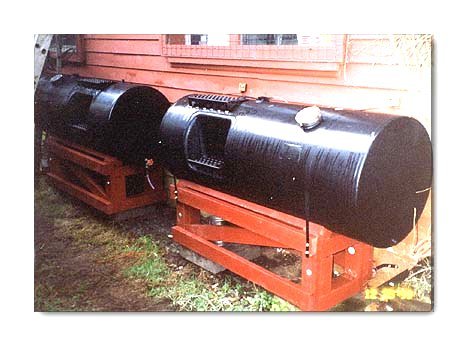
Building a Cradle
HALLER "ORIGINEEL"
STOVES
KEROSENE
HEATERS MADE IN THE NETHERLANDS
Beatrice Boiling Stoves & Mini kerosene heaters
you can make
Sad Iron stoves; Wicks &
Installation instructions
Wicking For Oil
Burning "WICKLESS" Stoves & Ranges
Photo Album
Photos of
Wicks
Mail Order
Form
Kerosene Stoves, Lanterns and Ovens
Kerosene Stoves -
Recommendations on different models
Kerosene
Stove Maintenance and Storage
Butterfly A-822, 22 wick, all-aluminum
premium stove.
Butterfly #2487, 16 wick stove.
Butterfly #2412 Pressure
Stove;
instructions for virtually any pressure stove.
Butterfly #2418
Double Burner Stove;
good with any gravity flow stove.
Butterfly #2421
Oven for Kerosene Stoves
Butterfly #2641, 10 Wick Stove
-
the least expensive emergency stove.
Butterfly #2698 Cook Stove -
THE Best Heavy Duty Cook Stove.
Butterfly
#828R Pressure Lantern;
same for most pressure lanterns.
Back to top of page
|